







Tackling Plastic Pollution: A Collective Responsibility for a Sustainable Future
The world is in a struggle with plastic. It can’t seem to do without it and definitely can’t live with it. It litters the landscape, cloaks the drains and gutters and fills the canals,...

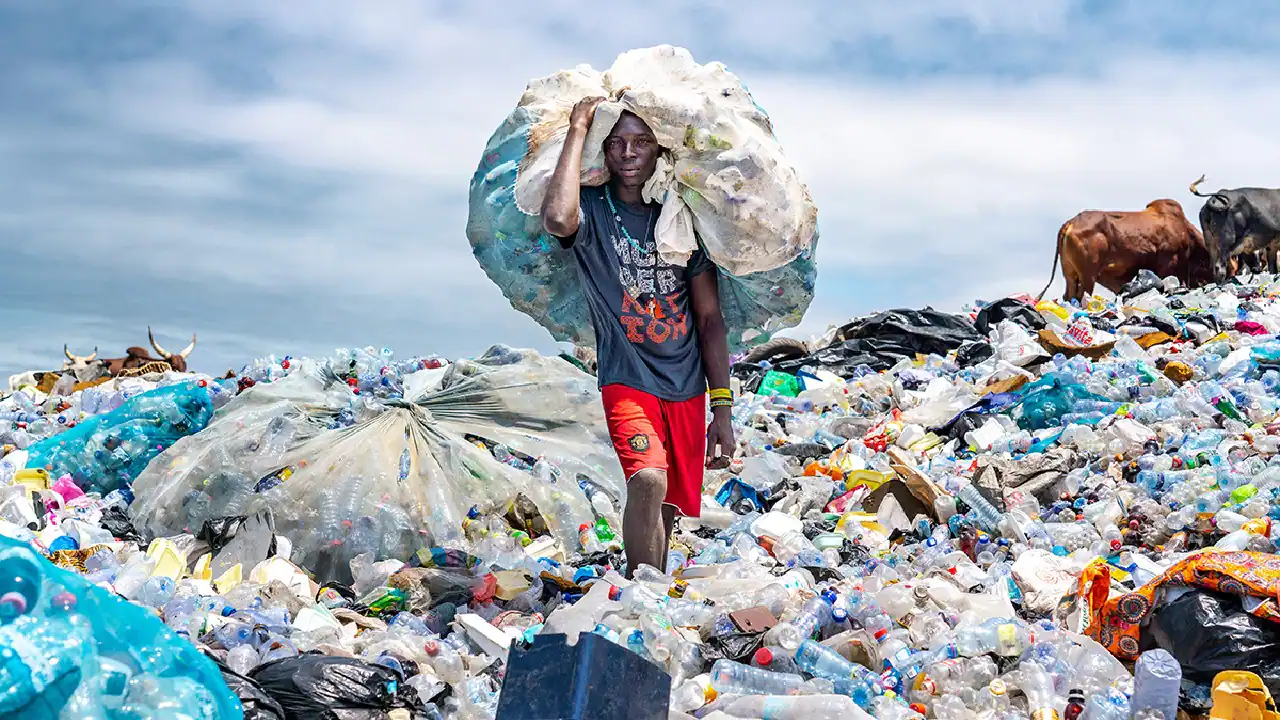
The world is in a struggle with plastic. It can’t seem to do without it and definitely can’t live with it. It litters the landscape, cloaks the drains and gutters and fills the canals, rivers and oceans. The UN says ‘the world is choking on plastic’ and National Geographic says ‘the world is drowning in plastic’.
Plastic is in almost everything. It is nearly everywhere. It is the true definition of ubiquitous. Experts concede that plastic waste is one of the major challenges to the environment and human existence. Indeed, plastics hold the world in a vice-like grip. It is impossible to escape plastic. Plastic waste is a plague.

The Principles for Responsible Investment in its 2019 report “The Plastics Landscape: The Challenges and Possible Solutions” asserts that across the globe plastic production and consumption are on the rise. And with less than 20 per cent of plastics recycled globally, it is no surprise that plastic waste is becoming more prevalent.
Another factor here is that 40 per cent of global plastics production is for packaging and 95 per cent is single-use. So, growth in production and consumption pattern along with an inefficient waste management system continues to precipitate an increasing volume of plastic waste.
Lagos alone generates 9000 metric tons of waste daily; 86% of the waste generated consists of plastic bottles and bags according to The Lagos State Waste Management Authority.
The real problem with plastic is that it does not break down naturally. The very properties that led to the rise in the adoption of plastics (durability, low density and non-degradability) are precisely why they are today an environmental nightmare.
To tackle the threat of plastic overwhelming the world every hand has to be on board. The public, as well as private, sectors, must be involved and necessarily be willing to work together. Plastics may be an environmental challenge, but they are equally a path to immense opportunities. Plastics can be a source of a great number of jobs and they are reused as raw materials for the production of other goods. Think of the circular economy: design, reuse, repair and recycling.
The Minister of Environment, Barr. Mohammed Abdullahi while speaking in Abuja at the inaugural meeting of the project steering committee for the plastic circular economy project, lamented that “only 45 per cent of waste in Nigeria are collected, 80 per cent of plastic waste goes to dump site while only 10 per cent is recycled.” The statistics are worrying. Suffice it to say that Nigeria has no efficient waste management system in place. Plastics are a menace.
At the core of the plastic menace are PET bottles, or polyethene terephthalate bottles. PET bottles pose a significant environmental threat due to their non-biodegradable nature. When they end up in landfills or oceans, they can take hundreds of years to decompose and release harmful chemicals into the environment. Additionally, discarded PET bottles can cause harm to wildlife, with many marine animals consuming them, leading to serious health consequences. The scale of the issue is significant, with billions of PET bottles produced annually, and only a fraction of them being recycled or properly disposed of.
To address the issue of plastic waste, we must explore how to tackle the proper disposal of PET bottles.
To make a meaningful impact in addressing the issue of PET bottles, collaborative efforts are needed from bottlers, governments, and NGOs. In the fight for a sustainable future, collaboration is indispensable.
Firstly, bottlers can collaborate with governments and NGOs to support initiatives aimed at reducing plastic waste, such as awareness campaigns, recycling infrastructure improvements, and the promotion of reusable bottles.
Secondly, governments can work with bottlers and NGOs to establish policies and regulations that promote sustainable packaging practices and support research and innovation in alternative packaging materials and recycling technologies.
Thirdly, NGOs can play a critical role in raising awareness of the issue and promoting behavioural change among consumers. NGOs can work with governments and bottlers to support initiatives aimed at reducing plastic waste, including education and awareness campaigns.
Without active and sustained collaborative efforts the battle to curb PET doesn’t stand a chance.
Specifically, while several potential solutions can be explored to curb the menace of plastic (PET) waste, four of them can be implemented immediately:
Firstly, promote the use of reusable bottles, such as stainless steel or glass bottles. They can be used multiple times and do not contribute to plastic waste. This can be done through education and awareness campaigns, or by incentivizing the use of reusable bottles through discounts or other incentives.
Secondly, improve recycling infrastructure. This may include setting up more recycling centres, implementing effective collection systems, and creating markets for recycled PET. This can ensure that more PET bottles are recycled into new products, reducing the amount that ends up in the environment. Governments at the state and local levels must take the lead here.
Thirdly, governments can implement a bottle deposit system. Under this system, consumers pay a small fee when purchasing bottled drinks and receive a refund when returning the empty bottle. This system can incentivize consumers to return bottles for recycling, reducing the amount of waste that ends up in the environment. Bottlers must champion this and work actively with relevant government agencies.
Fourthly, bottlers of drinks can explore the use of biodegradable alternatives to PET bottles. Here we are talking about plant-based materials that can decompose naturally in the environment. Additionally, bottlers can reduce the amount of packaging used, and support recycling efforts.
There is no one size fits all solution to the problem of plastic (PET) waste management. Every option must be explored; every solution considered.
But more importantly, collaboration must be the watchword. In collaborating to tackle the menace of plastic pollution, we are engaged in a collective struggle for a sustainable future.
 Article written by Elvis Eromosele, a Corporate Communication professional and public affairs analyst in Lagos.


No Comment! Be the first one.