





China Plans High-Tech Fund To grow AI And Emerging industries
China has announced its plan to invest in the growth of Artificial Intelligence (AI) and emerging industries in a bid bid to consolididate on the global success of DeepSeek’s latest artificial...

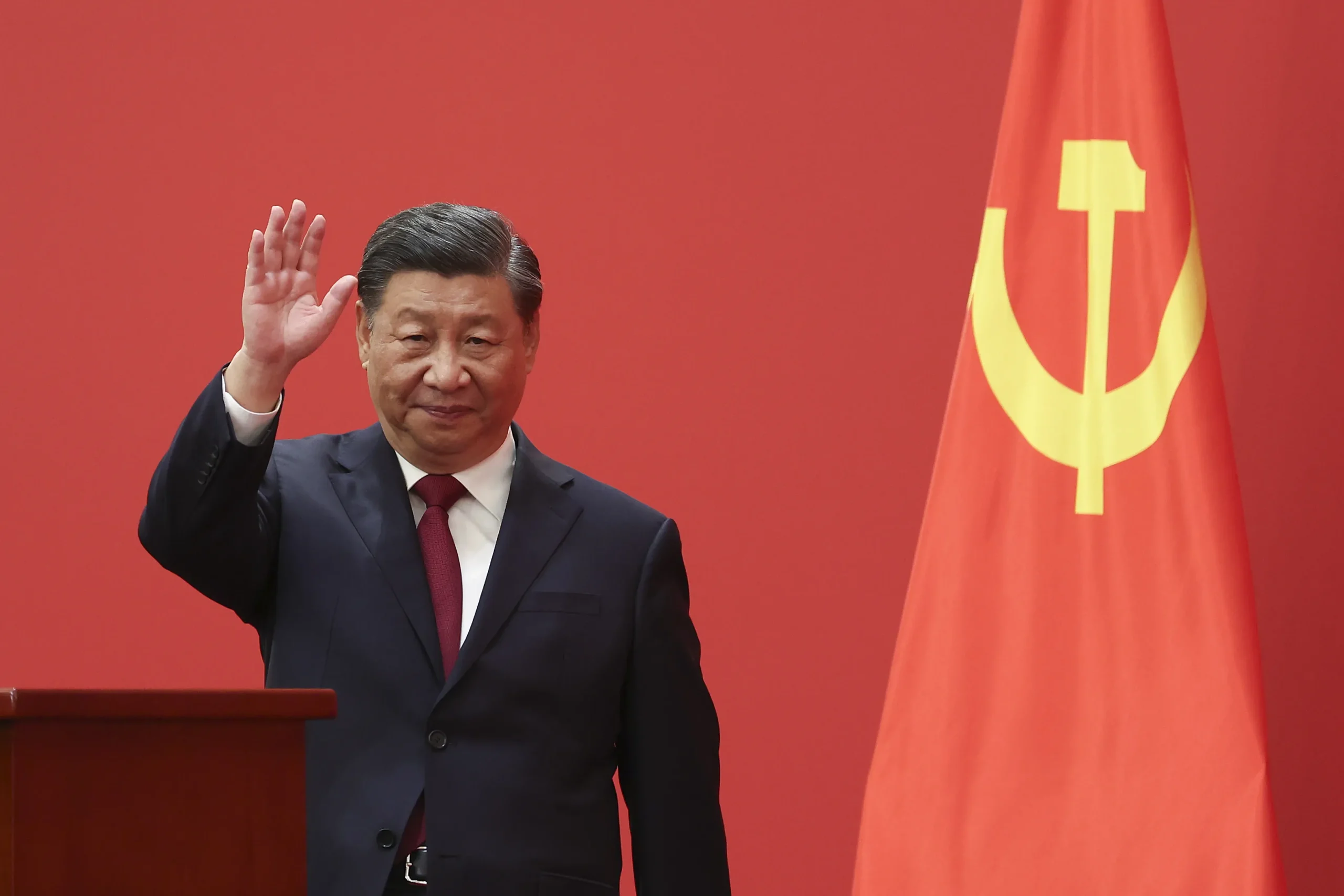
China has announced its plan to invest in the growth of Artificial Intelligence (AI) and emerging industries in a bid bid to consolididate on the global success of DeepSeek’s latest artificial intelligence reasoning model.
The “state venture capital guidance fund” will focus on cutting-edge fields such as artificial intelligence, quantum technology and hydrogen energy storage, Zheng Shanjie, head of China’s state economic planner, told reporters Thursday on the sidelines of the annual gatherings of China’s rubber-stamp national legislature and advisory body.
The fund is expected to attract nearly 1 trillion yuan ($138 billion) in capital over 20 years from local governments and the private sector, added Zheng, chairman of the National Development and Reform Commission.
Chinese leaders see high-end chips, quantum computing, robotics and AI as critical to powering economic growth and upgrading manufacturing. But China is facing mounting pressure from US tech restrictions.
Zheng struck a defiant tone at the news conference, hailing China’s rapid development in microchips and AI large language models as well as industrial and humanoid robots.
“Scenes once only seen in science fiction are now becoming reality. We are steadily moving toward the global frontiers of technology and innovation,” Zheng said. “This proves that the suppression and blockade attempt by certain forces only serve to accelerate our drive for independent innovation,” he added in an apparent reference to the United States.
DeepSeek, a privately owned company whose R1 large language model roiled global stock markets when it was introduced in January, was able to nearly match the capabilities of its rivals – including OpenAI’s GPT-4, Meta’s Llama and Google’s Gemini — but at a fraction of the cost.
That surprised observers because the US has worked for years to restrict the supply of high-power AI chips to China, citing national security concerns. That means DeepSeek was supposedly able to achieve its low-cost model on relatively under-powered AI chips.
On Wednesday, China’s Premier Li Qiang pledged to “foster emerging industries and industries of the future” as he delivered the government’s annual work report. Li promised to establish a mechanism to increase funding for industries such as bio-manufacturing, quantum technology, embodied AI and 6G technology.
Boosting consumption
After years of prioritizing tech innovation over domestic demand, China’s leaders have also started to show more commitment to strengthening consumption as their top policy task. The Chinese government will soon unveil a “special action plan to boost consumption,” said Zheng, the economic official.
Last year, despite a September stimulus push, much of the country’s growth momentum came from exports, which propelled China’s trade surplus to a record high of just under $1 trillion. That strength has drawn the ire of US President Donald Trump, who this week doubled US import tariffs on Chinese goods to 20%.
China’s household consumption as a share of the country’s gross domestic product (GDP) stood at just 39% in 2023, the most recent year for which data was available, according to the Macquarie Group, an investment bank. That compares with 49% for South Korea and 55% for Japan, two Asian countries with already high savings rates, and 68% for the United States.
“Beijing is determined to find strength from within amid rising external uncertainties. China is launching special actions to boost domestic consumption,” HSBC economists led by Jing Liu wrote in a research note on Wednesday.
As part of those efforts, China raised its budget deficit to around 4% of gross domestic product, Premier Li announced in his work report. It was the highest level in decades and part of a plan to ramp up spending to counter the impact of US tariffs.
He also indicated that the quota for government bond issuance would be raised by more than 25% from last year to 6.2 trillion yuan ($855 billion), split between the local and central authorities.
Special bonds issued by local governments will be used for infrastructure investment and to help the struggling housing market, while the central authorities would earmark around 300 billion yuan ($41 billion) to spend on consumer subsidies for a popular “cash-for-clunkers” trade-in program for cars and consumer electronics.
Key to the government’s success will be whether it is able revive the “animal spirits” of China’s private entrepreneurs, who will need to advance technological innovation as Beijing gears up for more restrictions from the US.
Last month, Chinese leader Xi Jinping hosted the country’s top tech executives in the capital, where he proclaimed it was “prime time” for private enterprises “to give full play to their capabilities.”
Private businesses contribute more than 60% to China’s GDP and over 80% of employment, despite being dwarfed by the state sector in size. However, many companies, particularly in the tech sector, are still recovering after a severe regulatory crackdown that lasted more than three years.
The Private Economy Promotion Law, which is due to be discussed during the ongoing “two sessions” political meetings, would ensure companies are legally supported and protected, according to Yang Decai, a director of the Private Economic Research Institute at Nanjing University and member of an advisory body to the legislature.
It “responds very promptly and effectively to some issues that the private sector is concerned about, such as property rights protection, fair competition,” he told journalists on Tuesday at the Great Hall of the People in Beijing. “This has boosted the confidence of private enterprises and our expectations for the market, which is of great significance to the stable growth of the Chinese economy.”


No Comment! Be the first one.