







Inside the ₦9.18bn Comeback: How Infrastructure Powered Chams, CWG and eTranzact’s Turnaround
In 2020, three of Nigeria’s longest-standing technology firms — Chams, CWG, and eTranzact — were struggling. Together, they posted a combined after-tax loss of ₦2.39 billion. Five years later, in...

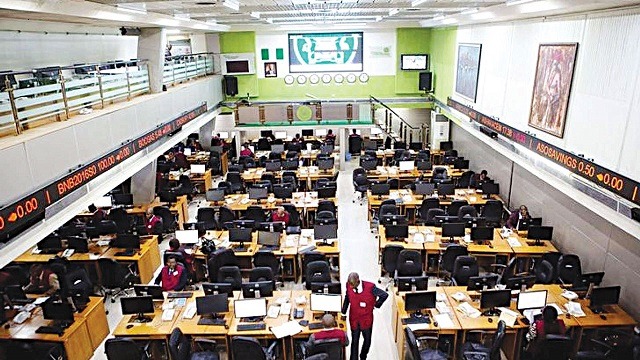
In 2020, three of Nigeria’s longest-standing technology firms — Chams, CWG, and eTranzact — were struggling.
Together, they posted a combined after-tax loss of ₦2.39 billion.
Five years later, in 2025, the story has dramatically changed. The trio delivered a combined profit after tax of ₦9.18 billion, while revenue jumped 209.09% over the same period. Their share prices on the Nigerian Exchange have followed suit, reflecting renewed investor confidence.
This turnaround was not driven by flashy consumer apps or aggressive marketing. Instead, it came from a deliberate pivot into infrastructure-heavy segments of Nigeria’s digital economy — SIM manufacturing, core banking software, and payments switching.
Here’s how each company engineered its recovery.
Chams: From BVN Dependency to Card and SIM Manufacturing
In 2020, Bank Verification Number (BVN) services accounted for 38.17% of Chams’ revenue. Total revenue that year stood at ₦2.11 billion.
By 2025, BVN-related income had collapsed to just 0.07% of revenue. Instead, biometrics and card-related services became the new growth engines, helping revenue surge to ₦17.49 billion.
A major catalyst for this shift was Chams’ decision to reduce exposure to government-linked receivables after incurring a $100 million debt tied to government obligations in 2023. The company redirected focus toward switching services and card production through its CardCentre subsidiary.

An August 2022 ban on SIM card importation created a tailwind for local manufacturers. Since 2022, CardCentre has supplied SIM cards to MTN Nigeria, scaling from 2.5 million SIMs annually to about three million SIM cards per month by late 2025. It also produces 5,000 bank cards daily, with plans to scale to 100,000 daily.
Revenue from card products rose from ₦343 million in 2020 to ₦5.90 billion in 2025.
However, the expansion came at a cost. Cost of sales increased by 30.77%, contributing to a 13.06% decline in gross profit. Still, management is doubling down. In August 2025, Chams announced plans to raise ₦7.65 billion through a rights issue and private placement to fund a new card personalisation plant and expand cross-border payment solutions.

Chams’ strategy is clear: own the physical rails of Nigeria’s digital identity and payments ecosystem.
CWG: Betting Big on Core Banking Software
In 2020, CWG’s revenue leaned heavily on managed services and IT infrastructure. Software contributed just 12.69% of total revenue.
Fast forward to 2025, and software has become central to CWG’s growth story.
The turning point came in 2024, when Nigerian banks embarked on large-scale core banking upgrades. Through its partnership with Infosys, CWG distributed the Finacle core banking application to leading Nigerian banks, positioning itself at the centre of banking transformation.
By 2025, software contributed 31.86% of CWG’s ₦65.66 billion revenue. IT infrastructure services still accounted for 36.60%, reflecting its legacy strengths, while support and distribution income from Finacle accounted for 28.67%.
CWG also improved operational efficiency. Cost of sales dropped from 86.20% of revenue in 2020 to 75.47% in 2025.
However, growth could have been stronger. Trade receivables stood at ₦23.94 billion, suggesting that credit sales may be slowing cash flow momentum.
Looking ahead, CWG is positioning itself as a system integrator for Nigeria’s mandatory electronic invoicing system under the monitoring, billing and settlement platform, while exploring expansion into East Africa and the Middle East.
Its future depends on scaling beyond Nigeria while maintaining its dominance in backend banking systems.

eTranzact: Moving Beyond Airtime
Of the three companies, eTranzact’s transformation has been the most gradual.
In 2020, airtime sales accounted for a staggering 93.63% of its ₦22.72 billion revenue. But airtime resale is a low-margin, high-volume business.
By 2024, airtime’s contribution had fallen to 56.29%. The company confirmed that this percentage declined further in 2025, although detailed audited breakdowns are pending.
Revenue reached ₦29.82 billion in 2025 — a modest 31.24% growth since 2020, significantly slower than Chams and CWG.
eTranzact is deliberately trading volume for value.
Its focus is shifting to switching infrastructure — funds transfers, bill payments, payment gateways, merchant acquiring and financial inclusion services. Products like PocketMoni, Corporate Pay, PayOutlet and SwitchIT form the backbone of this strategy.
Administrative expenses rose to ₦9.24 billion in 2025, reflecting depreciation on new assets and investments in manpower to support infrastructure expansion.
The company is also positioning itself within Nigeria’s e-invoicing rollout, aiming to become a preferred tax digitisation infrastructure partner.
However, management expects Q1 2026 revenue to decline by 42.69% and profit to fall by 18.98%, underscoring that the transition is still underway.
The Bigger Picture: Infrastructure Is Winning
The combined results of Chams, CWG and eTranzact reveal a clear pattern.
Consumer-facing, low-margin revenue streams are giving way to infrastructure-led growth models. SIM manufacturing, core banking systems, switching infrastructure and government-backed digital platforms are driving profitability.
Chams is riding the card production boom.
CWG is capitalising on core banking upgrades.
eTranzact is repositioning as a switching and tax infrastructure player.
Their share price recovery reflects market confidence that infrastructure — not hype — is where durable value is being built.
In Nigeria’s evolving digital economy, backend systems are proving more profitable than front-end buzz.
Exchange rate used: ₦1,355.42/$
CWG and eTranzact reversed ₦2.4bn in losses
TechCabal



No Comment! Be the first one.