







Nigeria’s Internet Economy Surges as Users Spend N3.3 Trillion on Data in Three Months
Nigeria’s digital economy continues to expand at a rapid pace, with consumers spending N3.33 trillion on internet data in the first quarter of 2026, according to new figures from the Nigerian...

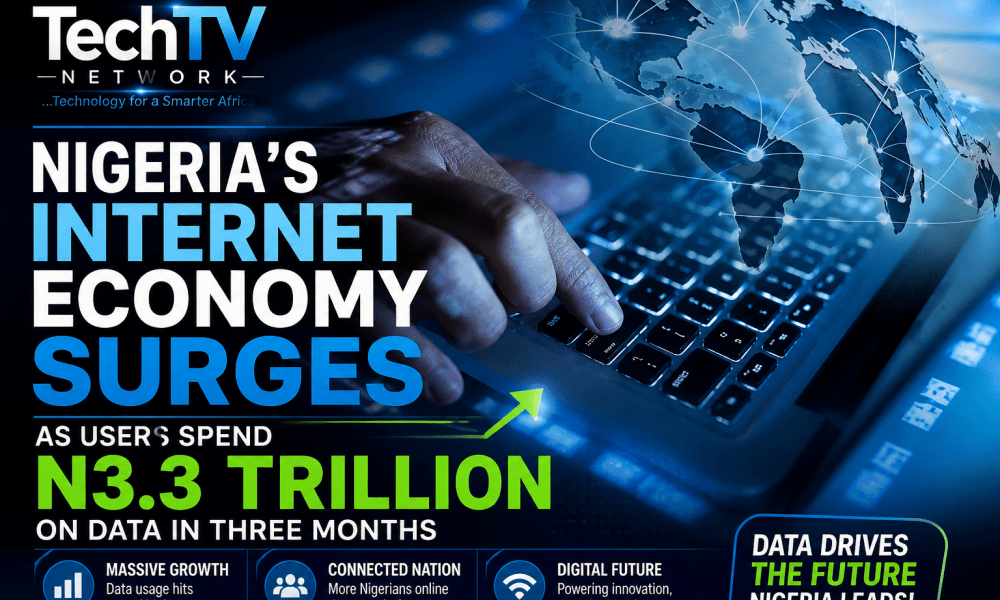
Nigeria’s digital economy continues to expand at a rapid pace, with consumers spending N3.33 trillion on internet data in the first quarter of 2026, according to new figures from the Nigerian Communications Commission (NCC).
The data reveals a sharp rise in consumption, with over 4.06 million terabytes used between January and March, underscoring the country’s growing dependence on connectivity across work, business, and everyday life.
By the numbers
January: 1.385 million terabytes — ~N1.13 trillion spent
February: 1.26 million terabytes — ~N1.03 trillion spent
March: 1.42 million terabytes — ~N1.14 trillion spent (highest on record)
On average, Nigerians consumed 27.9GB per user within the quarter, driven by streaming, video calls, social media, and cloud-based work tools.
Internet as infrastructure
For millions of Nigerians, the internet is now core infrastructure.
From campus entrepreneurs and digital vendors to ride-hailing drivers, POS agents, and SMEs, connectivity powers transactions, logistics, and customer engagement. Remote and hybrid work trends have also turned data access into a non-negotiable requirement for productivity.
Simply put: the internet is now the operating system of Nigeria’s economy.
Rising demand, declining experience
Despite the surge in usage, network quality remains a major concern.
Industry data points to hundreds of outages and frequent fibre cuts disrupting service nationwide. Yet, subscriber numbers continue to grow.
This contradiction highlights a key reality: users are locked into a system with limited alternatives.
Switching between providers often yields marginal differences, leaving consumers to prioritise access over quality.
The “no-choice” effect
The result is what analysts describe as a “no-choice digital market”—where demand keeps rising regardless of user dissatisfaction.
For students, remote workers, fintech operators, and businesses, being offline is simply not an option.
What’s next for the sector?
To tackle infrastructure challenges, stakeholders are backing the Dig-Once policy, which integrates fibre deployment into road and rail construction.
The policy is expected to:
Reduce fibre damage and service interruptions
Lower deployment costs
Accelerate Nigeria’s 90,000km fibre expansion goal
If executed effectively, it could mark a turning point in improving network reliability nationwide.
As Nigeria’s appetite for data grows, the big question remains: can infrastructure keep up with demand, or will users continue to pay more for less?


No Comment! Be the first one.