
Nigeria Deepens Digital Economy Drive as Galaxy Backbone Celebrates 20 Years of Impact
Digital Transformation Summit 2026 Reinforces Technology as the Foundation of Economic Growth, Governance and National Competitiveness Abuja, Nigeria — Nigeria has reaffirmed its commitment to...

Digital Transformation Summit 2026 Reinforces Technology as the Foundation of Economic Growth, Governance and National Competitiveness
Abuja, Nigeria — Nigeria has reaffirmed its commitment to building a technology-driven economy, with government leaders, policymakers, regulators, and industry stakeholders emphasizing that the country’s future prosperity will increasingly depend on digital transformation, innovation, and strategic investment in digital infrastructure.
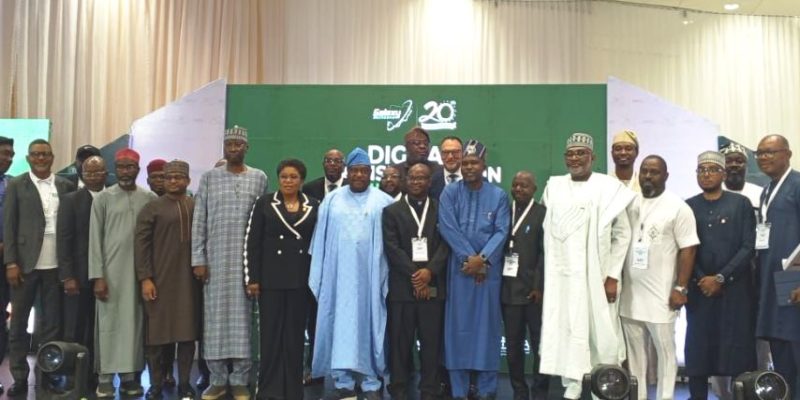
The position was reinforced at the Digital Transformation Summit 2026, held in Abuja to commemorate the 20th anniversary of Galaxy Backbone, Nigeria’s foremost government digital infrastructure provider.
The summit highlighted the critical role of digital infrastructure in accelerating economic growth, enhancing governance efficiency, improving public service delivery, and positioning Nigeria as a competitive player in the global digital economy.
Technology Now Central to National Development
Speaking at the summit, the Secretary to the Government of the Federation (SGF), Senator George Akume, said digital technology has evolved beyond being a support tool and is now a core driver of national development.
According to him, the success of President Bola Ahmed Tinubu’s Renewed Hope Agenda will depend significantly on how effectively Nigeria leverages technology to improve governance, promote inclusion, and stimulate economic growth.
“Technology is not merely an enabler. It is a catalyst for national development, transparency, inclusion and growth. The future of national prosperity will increasingly depend on how effectively we leverage technology to improve the lives of our people,” Akume stated.
He also called for stronger collaboration among federal, state, and local governments to accelerate the country’s digital transformation agenda.
According to the SGF, the infrastructure, expertise, and partnerships already exist, but greater adoption and coordinated implementation are required to unlock their full value.
Galaxy Backbone Reflects on 20 Years of Digital Infrastructure Impact
Marking two decades of operation, Managing Director and Chief Executive Officer of Galaxy Backbone, Professor Ibrahim Adeyanju, highlighted the organisation’s contributions to Nigeria’s digital development journey.
Over the last 20 years, Galaxy Backbone has played a central role in:
Expanding government digital infrastructure
Delivering secure cloud services
Strengthening cybersecurity capabilities
Connecting Ministries, Departments and Agencies (MDAs)
Supporting digital public service delivery nationwide
Adeyanju stressed that digital infrastructure has become the foundation upon which modern economies compete and grow.
“With one of Africa’s largest populations, a vibrant entrepreneurial ecosystem and a young, innovative population, Nigeria’s digital future is not merely an aspiration but a necessity,” he said.
He described the summit as a strategic platform bringing together policymakers, investors, innovators, and technology leaders to shape Nigeria’s next decade of digital transformation.
Nigeria’s Digital Economy Positioned for Accelerated Growth
The National Commissioner and Chief Executive Officer of the Nigeria Data Protection Commission (NDPC), Dr. Vincent Olatunji, noted that Nigeria’s digital economy is currently valued at approximately $18.3 billion, with significant growth potential in the coming years.
According to him, the global digital economy is projected to reach $28 trillion by 2026, representing more than 22 percent of global GDP.
He expressed optimism that Nigeria’s digital economy could contribute as much as 20 percent of national GDP if the country sustains investments in digital infrastructure, data governance, innovation, and technology adoption.
Olatunji emphasized that data has become one of the most valuable assets in the modern economy and remains central to national competitiveness.
Civil Service Digitalisation Reaches Major Milestone
The Head of the Civil Service of the Federation, Mrs. Didi Esther Walson-Jack, disclosed that all 38 Federal Ministries and Extra-Ministerial Departments successfully completed the digitalisation of core operational processes by December 2025.
The achievement represents a major milestone in Nigeria’s public sector reform programme and the modernization of government service delivery.
She credited Galaxy Backbone for providing critical infrastructure supporting the transition, including:
iGovernment Cloud Services
GovMail Platform
Secure Connectivity Infrastructure
High-Speed Government Internet Services
According to her, digitalisation is helping to improve efficiency, transparency, accountability, and service delivery across government institutions.
Senate Advances Digital Economy Legislation
Also speaking at the summit, Chairman of the Senate Committee on ICT and Cyber Security, Senator Shuaibu Salisu, announced progress on the proposed National Digital Economy and E-Governance Bill.
The legislation is expected to establish a comprehensive regulatory framework for Nigeria’s digital economy while creating opportunities for innovation, investment, and job creation.
Salisu expressed confidence that the bill would be passed before the conclusion of the 10th National Assembly.
“Just imagine the number of jobs and opportunities that will be created when this bill becomes law. For those who have acquired digital skills, there will be opportunities to contribute directly to the digital transformation of government institutions,” he said.
AI, Cloud Computing and Data Set to Shape Nigeria’s Future
Stakeholders at the summit agreed that emerging technologies such as Artificial Intelligence (AI), cloud computing, big data analytics, automation, and digital platforms are redefining global economic competitiveness.
Speakers emphasized that nations that invest early in digital infrastructure and technology ecosystems will be better positioned to attract investment, create jobs, and drive sustainable economic growth.
For Nigeria, digital transformation is no longer optional but an economic imperative.
A Defining Moment for Nigeria’s Digital Future
The 20th anniversary of Galaxy Backbone was widely regarded as more than a corporate milestone. It was celebrated as a reflection of Nigeria’s broader digital transformation journey and its ambition to become a leading digital economy in Africa.
The summit showcased significant progress in:
National broadband and connectivity expansion
Government cloud adoption
Cybersecurity development
Digital public service delivery
Data governance and protection
Digital economy growth
As Nigeria continues to deepen investments in technology, innovation, and digital infrastructure, stakeholders believe the country is laying the foundation for a more connected, efficient, inclusive, and globally competitive economy.