




Women in Tech Leaders Call for Bold Policy Reforms to Accelerate Digital Inclusion and Economic Empowerment
Women technology leaders, policymakers and digital economy advocates have called for bold policy reforms to accelerate digital inclusion and economic empowerment, arguing that Nigeria’s...

Women technology leaders, policymakers and digital economy advocates have called for bold policy reforms to accelerate digital inclusion and economic empowerment, arguing that Nigeria’s ambition to build a globally competitive digital economy will only be realised when women move beyond access to technology into positions of leadership, ownership and influence.
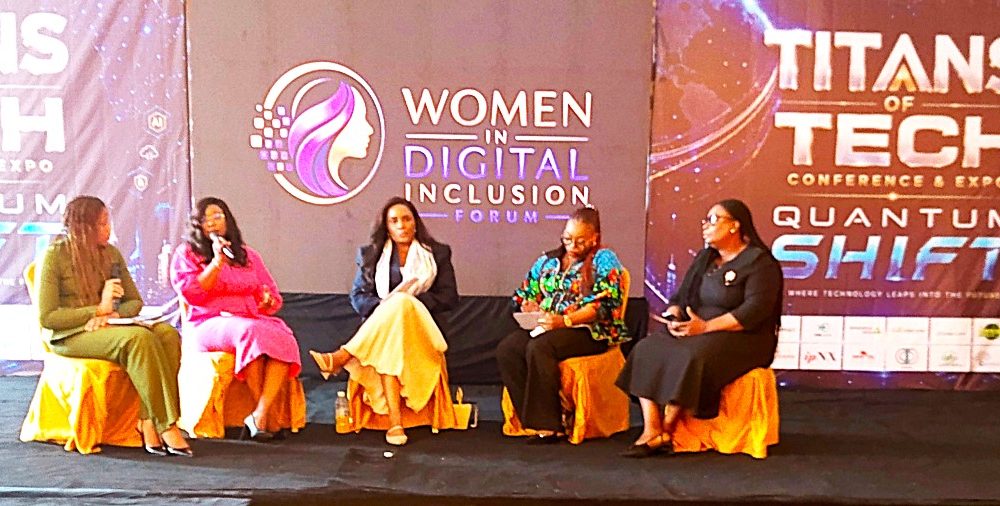
The call was made during the Women in Tech & Digital Inclusion Forum at the Titans of Tech Conference & Expo 2026, themed “Quantum Shift.” The session, titled “Women, Digital Inclusion & Digital Identity: Expanding Access, Opportunity and Economic Empowerment,” brought together industry leaders to examine the policies and investments needed to unlock greater opportunities for women across Nigeria’s technology ecosystem.

The panel featured Adesuwa Imasekha, Founder of Women Impacting Nigeria (WIN); Bimbo Aderibigbe who represented Seyi Onasanya, Chief Operating Officer of the Nigeria Internet Registration Association (NiRA); Funmilola Omojola, Founder of RiseUP & Sparkle Initiative; and Kesiena Ogheneruru, Chief Operations & People Officer at ZORACOM. The discussion was moderated by Oloruntobi Opawoye, Head of Tech Disputes Resolution at Jackson, Etti & Edu.
Opening the discussion, Adesuwa Imasekha challenged policymakers to redefine the conversation around digital inclusion, stressing that expanding internet access alone would not deliver sustainable economic transformation.
“Access alone does not shape an economy. Authority does,” she said.
Drawing on GSMA data showing a 26 per cent mobile internet gender gap in Sub-Saharan Africa, she argued that increasing connectivity, while essential, would have limited impact unless women were equally represented where policies are formulated, investments approved and businesses built.
“The real shift is not simply getting more women online. It is getting more women into the rooms where the terms are set.”
Adesuwa Imasekha also referenced International Finance Corporation (IFC) data showing that women occupy only 11 per cent of senior investment board positions across emerging-market venture capital and private equity firms, describing the disparity as a structural challenge requiring deliberate government intervention.
According to her, public policy should extend beyond expanding access to technology by creating opportunities for women to participate in ownership, governance, investment and capital allocation.
The discussion highlighted policy as the most important driver of inclusive digital growth.
Bimbo Aderibigbe said Nigeria could draw lessons from the energy sector, where local content legislation, dedicated funding programmes and institutional support have significantly increased indigenous participation.
“Everything flows from policy,” she said. “If women are absent when policies are being designed, they cannot expect to be fully included in the outcomes.”
She called for the establishment of a dedicated development fund for indigenous technology companies and urged governments, regulators and large organisations to intentionally expand procurement opportunities for qualified women-owned technology businesses.
“Procurement represents one of the largest pools of capital. Deliberately opening procurement opportunities to qualified women-owned businesses would significantly transform women’s participation in technology.”
Bimbo Aderibigbe further argued that policy conversations should now move beyond digital literacy and capacity-building initiatives.
“We’ve had enough training programmes. The real question is how women move from training to income, from income to ownership, and from ownership to influence.”
Speaking on the barriers preventing greater female participation in technology, Funmilola Omojola identified poverty, limited access to quality education, restrictive cultural norms and inadequate access to finance as key obstacles slowing progress.
She called for stronger government investment in STEM education, mentorship programmes and innovation initiatives targeted at girls from an early age.
“We need policies that encourage girls to pursue science and technology careers and create opportunities for them to become innovators, not just users of technology.”
The panel also examined financing as one of the biggest constraints facing women entrepreneurs in the digital economy.
Ogheneruru argued that women-led technology businesses require greater access to long-term investment capital rather than short-term grant programmes.
She advocated the creation of a one-stop platform through which women entrepreneurs could easily access business registration, financing, regulatory compliance services and market opportunities, describing such an initiative as critical to accelerating the growth of women-owned digital enterprises.
Throughout the session, speakers returned to the conference theme, “Quantum Shift,” describing it as a call for transformative thinking and deliberate action that places women at the centre of Africa’s digital future.
The forum concluded with a strong appeal to governments, regulators, development partners, investors and the private sector to implement policies that intentionally increase women’s participation in technology leadership, procurement, innovation, venture capital and digital governance.
Participants agreed that meaningful digital inclusion is no longer simply about connecting more women to technology. Rather, they said, it is about empowering women to shape policies, lead organisations, build globally competitive businesses and drive the next phase of Africa’s digital transformation.
As Nigeria accelerates its digital economy agenda, the consensus from the forum was clear: achieving true economic empowerment will require policies that move women from the margins of innovation to the centre of decision-making, ensuring they become not only participants in the digital economy but architects of its future.