







How US Curb on Microchips Could Escalate Tech War With China
Chinese leader Xi Jinping’s push to “win the battle” in core technologies and bolster China’s position as a tech superpower could be severely undermined by Washington’s unprecedented steps to limit...


Chinese leader Xi Jinping’s push to “win the battle” in core technologies and bolster China’s position as a tech superpower could be severely undermined by Washington’s unprecedented steps to limit the sale of advanced chips and chip-making equipment to the country, analysts say.

On October 7, the Biden administration unveiled a sweeping set of export controls that ban Chinese companies from buying advanced chips and chip-making equipment without a license. The rule also restricts the ability of “US persons” — including American citizens or green card holders — to provide support for the “development or production” of chips at certain manufacturing facilities in China.
“The US moves are a major threat to China’s technological ambitions,” said Mark Williams and Zichun Huang, analysts at Capital Economics, in a recent research report. The analysts pointed out that the global semiconductor industry is “almost entirely” dependent on the United States and countries aligned with it for chip design, the tools that make them, and fabrication.
“Without these,” the analysts said, “Chinese firms will lose access not only to advanced chips, but to technology and inputs that might over time have allowed domestic chipmakers to climb the ladder and compete at the cutting edge.” They added: “The US has chopped the rungs away.”
Chips are vital for everything from smartphones and self-driving cars to advanced computing and weapons manufacturing. US officials have talked about the move as a measure to protect national security interests. It also comes as the United States is looking to bolster its domestic chip manufacturing abilities with heavy investments, after chip shortages earlier in the pandemic highlighted the country’s dependance on imports from abroad.
Arthur Dong, a teaching professor at Georgetown University’s McDonough School of Business, described the recent US sanctions as “unprecedented in modern times.”
Previously, the US government has banned sales of certain tech products to specific Chinese company, such as Huawei. It has also required some major US Chip making Firms to halt their shipments to China. But the latest move is much more expansive and significant. It not only bars the export to China of advanced chips made anywhere in the world using US technology, but also blocks the export of the tools used to make them.
With its Made-in-China 2025 road map, Beijing has set a target for China to become a global leader in a wide range of industries, including artificial intelligence (AI), 5G wireless, and quantum computing. At the Communist Party Congress earlier this month, where he secured a historic third term, Xi highlighted that the nation will prioritize tech and innovation and grow its talent pool to develop homegrown technologies.
“China will look to join the ranks of the world’s most innovative countries by 2035, with great self-reliance and strength in science and technology,” Xi said in the party congress report, released on October 16.
Dong said the latest US sanctions will make it harder for China to advance in AI as well as 5G, given the role advanced chips play in both industries.
“In any circumstances,” Williams from Capital Economics said, “China would find achieving global tech leadership hard to achieve.”
Mass resignation of US executives?
One dramatic, and potentially disruptive aspect of the rules is the ban on American citizens and legal residents working with Chinese chip firms.
Dane Chamorro, a partner at Control Risks, a global risk consultancy based in London, said such measures are usually “only enacted against ‘rogue regimes’” such as Iran and North Korea. The decision to use this against China is “unprecedented,” Chamorro said.
Many executives working for Chinese firms may now have to choose between keeping their jobs or acting as lawful US residents. “You can’t do both,” Chamorro said.
The ban could lead to a mass resignation of top executives and core research staff working at Chinese chip firms, which will hit the industry hard, Dong from Georgetown University said.
So far it’s not clear exactly how many American workers there are in China’s domestic chip industry. But an examination of company filings indicates that more than a dozen chip firms have senior executives holding US citizenship or green cards. At Advanced Micro-Fabrication Equipment China (AMEC), one of the country’s largest semiconductor equipment manufacturers, at least seven executives, including founder and chairman Gerald Yin, hold US citizenship, the latest company documents show.
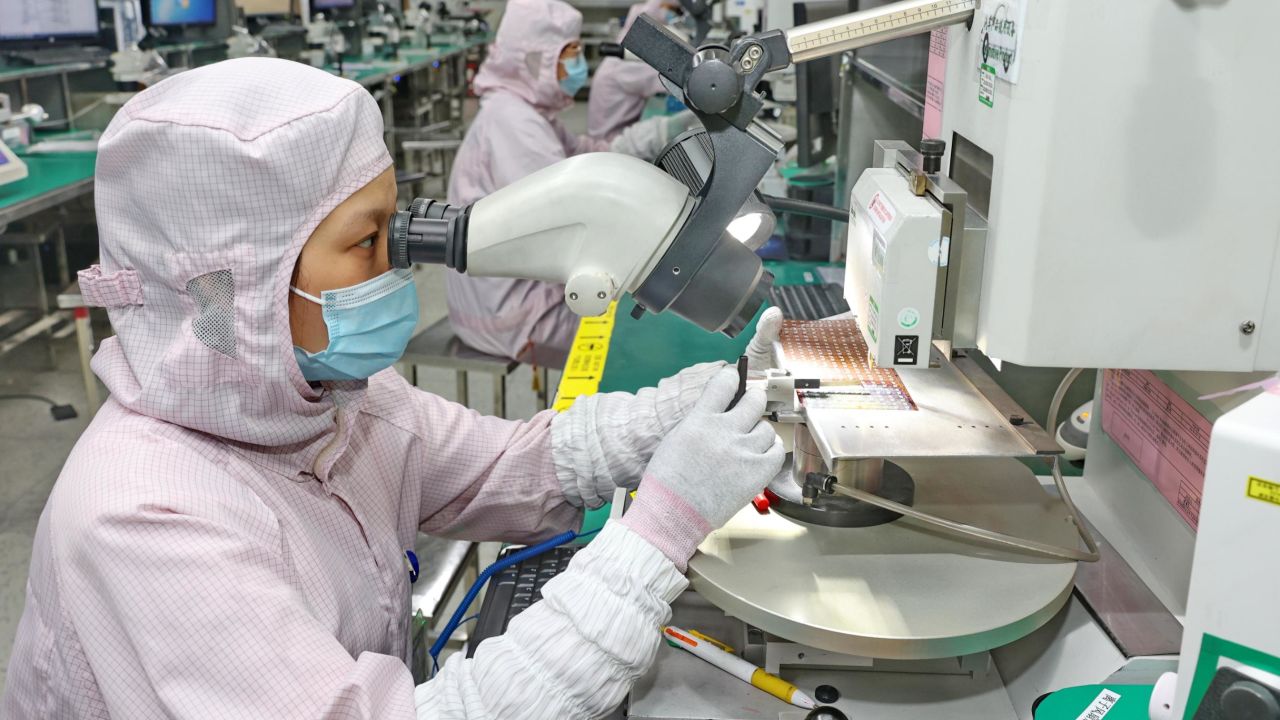
Other examples include Shu Qingming and Cheng Taiyi, who currently serve as vice chairman and deputy general manager, respectively, at GigaDevice Semiconductor, an advanced memory chip firm. The Financial Times report said in a recent report that Yangtze Memory Technologies has already asked American employees in core tech positions to leave, citing anonymous sources. But it’s unclear how many.
AMEC, GigaDevice Semiconductor, and Yangtze Memory Technologies didn’t respond to requests for comments.
If these senior executives depart, “this will create a leadership and technological void within China’s chipmaking industry,” Dong said, as the country loses executives with years of chipmaking experience in an industry with “one of the most complex manufacturing processes known to mankind.”
Beginning of a tech war?
While much of the world’s chip manufacturing is centered in East Asia, China is reliant on foreign chips, especially for advanced processor and memory chips and related equipment.
It is the world’s largest importer of semiconductors, and has spent more money buying them than oil. In 2021, China bought a record $414 billion worth of chips, or more than 16% of the value of its total imports, according to government statistics.
But some Western suppliers have already started preparing to halt sales to China in response to the US export curbs.
ASM International the Dutch semiconductor equipment supplier, said Wednesday that it expected the export restrictions will affect more than 40% of its sales in China. The country accounted for 16% of ASML’s equipment sales in the first nine months of this year.
Lam Research which supplies semiconductor equipment and services, also flagged last week that it could lose between $2 billion and $2.5 billion in annual revenue in 2023 as a result of the US export curbs.
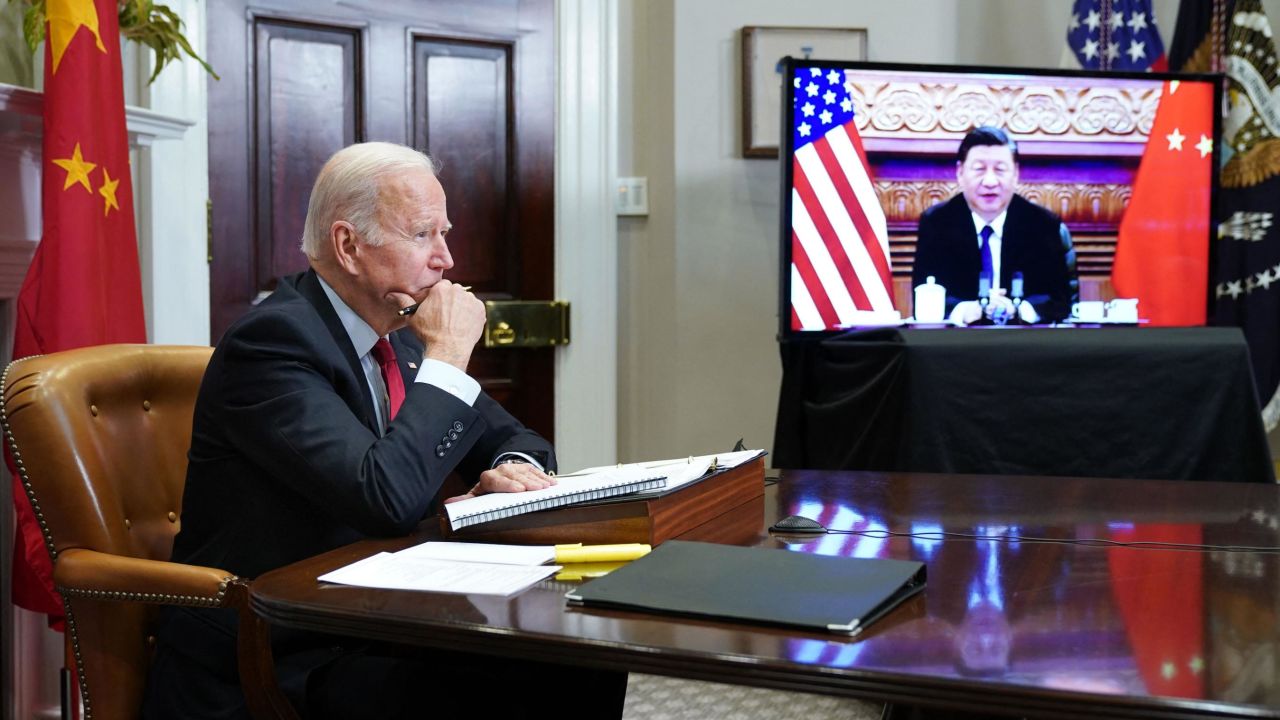
The party congress, which recently wrapped up, has slowed China’s response to latest US export controls, analysts said. But as Beijing starts assessing the significance of the measures, it might retaliate. Xi is “concerned” about US plans to bolster domestic chip production as his administration moves to restrict China’s ability to make them, said US President Joe Biden in a speech on Thursday.
“This conflict is just beginning,” said Chamorro. China wants even more control over rare earths
Chamorro said the most valuable “card” in China’s hand might be the supply of processed rare earth minerals, which Beijing could embargo. Rare earth minerals are important materials in electric vehicle production, battery making and renewable energy systems.
“These are not easily or quickly replaced and China dominates the processing and supply chain,” Chamorro said.
The Biden administration, meanwhile, is also weighing further restrictions on other technology exports to China, a senior US Commerce Department official said Thursday, according to the New York Times.
If either country takes these steps, it could shift the tech arms race between the United States and China to a whole new level.


No Comment! Be the first one.