






Teknowledge, Microsoft Expand AI Skilling Programme to Train 10,000 More Nigerians
Teknowledge has deepened its partnership with Microsoft to support the second phase of Microsoft’s AI National Skilling Initiative in Nigeria, aimed at equipping 10,000 additional Nigerians with...


Teknowledge has deepened its partnership with Microsoft to support the second phase of Microsoft’s AI National Skilling Initiative in Nigeria, aimed at equipping 10,000 additional Nigerians with artificial intelligence (AI) skills.
The expansion, announced on March 5, 2026, strengthens an ongoing collaboration that has already provided over 50,000 Nigerians with foundational and intermediate AI training.
The two companies first partnered in 2025 to design and implement one of Nigeria’s largest AI capacity-building programmes. The initial phase was structured as a nationwide initiative rather than a pilot, combining large-scale awareness campaigns, structured learning pathways, and hands-on technical training.
During the first phase, more than 3,000 participants completed advanced training and earned Microsoft AI certifications across multiple technical tracks.
Expanding AI training to universities and NYSC
The second phase will expand the programme’s reach into universities and the National Youth Service Corps (NYSC), while increasing participation among entrepreneurs, developers, and women in tech.
Training will follow a hybrid learning model, blending virtual instruction, practical AI projects, and targeted in-person engagements.
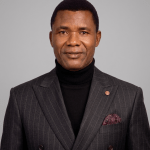
According to Olugbolahan Olusanya, Territory Director for Africa at Teknowledge, Nigeria is at a critical stage in its digital transformation journey.
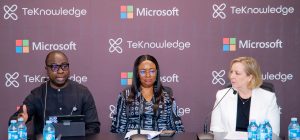
“Nigeria stands at a defining moment in its digital journey. AI is no longer a future concept; it is a present opportunity,” Olusanya said.
Focus on employment opportunities
A key feature of the expanded initiative is its emphasis on employment outcomes.
Teknowledge plans to organise a career fair that will connect programme graduates with potential employers and ecosystem partners, creating a direct pathway from AI training to job opportunities.
This approach differentiates the initiative from many traditional digital-skilling programmes by linking learning with real economic opportunities.
Building Nigeria’s AI talent pipeline
With a population exceeding 200 million people and one of the world’s youngest workforces, Nigeria is increasingly seen as a strategic hub for AI talent development in Africa.
During Phase 1, the programme also hosted a developer hackathon that produced nine applied agentic AI solutions addressing real-world challenges such as document verification, risk assessment, and fraud detection.
The solutions were developed using Microsoft Semantic Kernel and targeted industries such as fintech and other regulated sectors.
The initiative also collaborated with the federal government’s 3 Million Technical Talent (3MTT) Initiative, integrating AI capability-building into Nigeria’s broader national digital skills programme.
According to Olatomiwa Williams, Chief Growth and AI Officer at Microsoft Middle East and Africa, the innovation emerging from Nigeria highlights the potential of investing in AI skills.
“Africa has an incredible opportunity to become not only a participant but a builder and co-creator in the global AI economy. We are already seeing globally relevant solutions coming from Nigerian talent,” Williams said.
Strengthening Africa’s AI future
For Aileen Allkins, CEO and President of Teknowledge, investments in AI education today will determine global economic leadership in the years ahead.
“Nations that invest in AI literacy and responsible adoption today will define tomorrow’s economic leadership. Nigeria has the talent, ambition, and entrepreneurial energy to lead Africa’s AI transformation,” she said.
Teknowledge currently operates in over 90 countries and employs more than 2,000 professionals in Nigeria.
The company said the expanded partnership will further strengthen its commitment to building inclusive AI capabilities, focusing not only on training numbers but also on creating sustainable pathways from learning to livelihoods in Nigeria’s digital economy.


No Comment! Be the first one.