





Unilever Nigeria Stops Production of Omo, Sunlight, Lux
Unilever Nigeria, the local unit of British multinational consumer goods company Unilever Plc, is discontinuing the manufacturing of its homecare and skin-cleansing brands. The brands are Omo,...

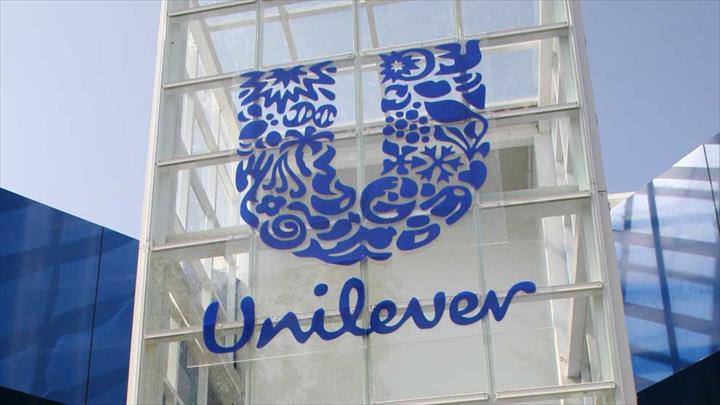
Unilever Nigeria, the local unit of British multinational consumer goods company Unilever Plc, is discontinuing the manufacturing of its homecare and skin-cleansing brands.
The brands are Omo, Sunlight and Lux, three household iconic brands which, at different points in history, have gained iconic status among consumers.
“On 17th March 2023, Unilever Nigeria Plc announced changes in its business model to exit Homecare and Skin Cleansing categories,” Unilever Nigeria stated in its recently released 2022 audited annual report.
“These categories are margin dilutive and the exit is part of the company’s aim to make its operation in Nigeria competitive and profitable,” the document added.
The profit margin for the fast-moving consumer goods sector is characteristically thin, sometimes single digit because competition is pretty fierce and pricing could be sensitive.
Net profit margin, a key profitability gauge measuring how much of revenue has turned to profit (after-tax), stood at 5 per cent for the fiscal year 2022, just a little higher than the 4.8 per cent reported by the company one year prior.
The margin dilution, which Unilever Nigeria said its homecare and skin-cleansing businesses triggered in its overall financial performance, was a major factor that kept profit margin low.
It implies that all things being equal, the manufacturer would have been reporting higher profit margins had it discontinued those two business units at the time they became pretty cost-intensive.
“All companies need to adapt to changing market circumstances and now is the right time for us to reposition Unilever Nigeria Plc. to better meet the needs of our consumers, shareholders, and employees,” CEO Carl Cruz said in a statement issued in the last week of March.
Mr Cruz noted that winding down the production of Sunlight, Omo and Lux will be gradual and not dramatic.
The two categories Unilever is exiting from currently form the crux of its Home and Personal Care division, which has accounted for the lion’s share of the company’s revenues and profit before tax (PBT) in the last two years.
While it accounted for 56 per cent (N39.5 billion) of revenue and 56 per cent (N1.2 billion) of PBT in 2021, it contributed 51.9 per cent (N45.9 billion) of revenue and 51.9 per cent (N4.1 billion) of PBT in 2022.Unilever said in a statement in March it would end its homecare and skin-cleansing businesses “to concentrate on higher growth opportunities.”
TEXEM Advert
The company, which has been facing a torrid time in accessing foreign exchange in Nigeria, since the pandemic lockdowns depleted the nation’s dollar earnings from oil sales, highlighted in the same document that it would be prioritising “business continuity measures that reduce exposure to devaluation and currency liquidity.”
Liquidity Concern
In May 2021, Nigeria’s central bank devalued the naira by 7.6 per cent against the dollar in a march towards a uniform foreign exchange rate as advised by the International Monetary Fund. But the government hasn’t been able to harmonise the exchange rates to boost investor confidence.
The dollar exchange rate closed at N463.25 as of Thursday at the official foreign exchange market, controlled by the government, compared to N740.65 at the parallel market, according to @naira_rates. That leaves the spread between both rates at almost 60 per cent.
Bloomberg projected in a report last November that Nigeria is set to see its biggest devaluation in six years this year as a new administration takes over next month. Bank of America said in a forecast in October 2022 that the naira could be devalued by as much as 20 per cent in 2023.
Godfrey Adejumoh, the spokesperson for Unilever Nigeria, directed referred to an old press statement when contacted for comment via email. But the press statement didn’t address any of the questions raised in the email.
In August 2021, Unilever said during an investors’ call it resorted to buying the dollar at 9 per cent above the market rate on account of a scarcity of the greenback in the country.
Adesola Sotande-Peters, the company’s finance director at that time, stated that Unilever, which relies on heavy petrochemical importation in the manufacturing of many of its products, required improved dollar supply.
“Companies that have products whose raw materials are probably locally sourced or they have other means of sourcing raw materials without paying much of foreign exchange will be making much profit on those lines now that everybody is looking inwards,” Folorunsho Adeleye, team lead of internal audit & compliance at Lagos-based Superflux told News men.
“So instead of them to keep spending what they are making on Product A to augment Product B and C, they will rather exit those lines to focus on A. Most of the companies that rely on importation of raw materials are having that challenge now except if they operating in a monopoly market where there is no substitute for their products.”



No Comment! Be the first one.