
AI to Affect 40% of Global Jobs, IMF Boss Warns
IMF Managing Director Kristalina Georgieva warns that artificial intelligence could transform, downgrade or eliminate jobs worldwide, with young people and entry-level workers particularly vulnerable.
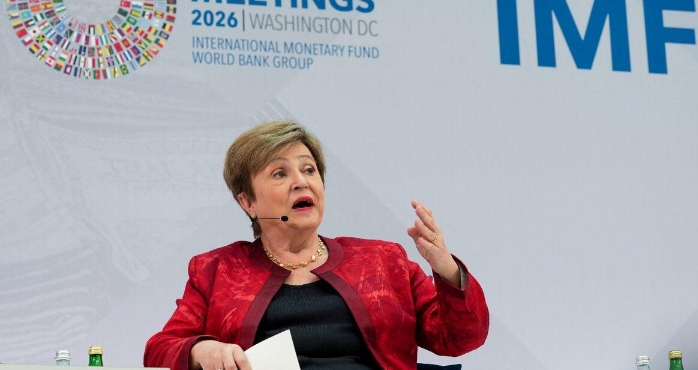
Artificial intelligence (AI) could affect approximately 40 per cent of jobs worldwide, as the technology reshapes labour markets, threatens traditional career pathways and forces governments to rethink education and workforce development, the International Monetary Fund (IMF) has warned.
IMF Managing Director Kristalina Georgieva issued the warning during a panel session at the 2026 IMF-World Bank Annual Meetings in Bangkok, Thailand, describing AI as a “slow-moving tsunami” for the global labour market.
According to Georgieva, AI could augment some jobs, change the nature of others or eliminate certain positions entirely, creating both opportunities for economic growth and significant challenges for workers.
The IMF estimates that AI could affect approximately 60 per cent of jobs in advanced economies, compared with 23 per cent in low-income countries.
However, the lower exposure in low-income economies does not necessarily offer greater protection. It largely reflects the slower adoption of AI, potentially leaving these countries less prepared to benefit from the technology.
Young Workers Face Growing Uncertainty
Georgieva identified young people entering the labour market as particularly vulnerable, warning that AI-driven automation could reduce opportunities to gain initial work experience and develop the skills required for career advancement.
Traditionally, entry-level positions involving routine and repetitive tasks have provided a pathway for young workers to acquire experience before progressing into more specialised and senior roles.
As AI increasingly performs such tasks, that traditional career ladder could become harder to climb
The concern extends beyond job losses to the potential erosion of opportunities for graduates and young professionals to secure their first jobs, develop practical skills and build sustainable careers.
Singapore's President, Tharman Shanmugaratnam, who also addressed the issue, warned that declining demand for entry-level workers could create a significant employment challenge, particularly for fresh graduates.
He called for greater collaboration between governments and businesses to create opportunities for young people, alongside reforms that strengthen practical training, internships and workplace learning.
AI Investment Supports Economic Growth
Despite the employment risks, the IMF chief acknowledged AI's growing contribution to global economic activity.
Investment in AI infrastructure, data centres and AI model development is stimulating demand and helping sustain global economic growth at around three per cent, despite the pressures created by energy supply disruptions.
The United States, China and India are among the major players in AI development, while several Asian economies are benefiting from investments in the infrastructure supporting the technology.
Georgieva stressed that the next phase of AI development would depend significantly on adoption and the ability of countries to establish the foundations needed to use the technology productively.
For developing economies, these foundations include reliable electricity, digital infrastructure, relevant skills and effective safeguards to promote safe and inclusive AI deployment.
Governments Urged to Rethink Education and Taxation
Georgieva called on governments to prepare for a labour market in which workers must continually update their skills as technology changes the nature of employment.
She argued that education systems must place greater emphasis on lifelong learning, recognising that skills acquired at the beginning of a career may no longer remain sufficient throughout a person's working life.
The IMF chief also raised concerns about the implications of AI for public finances.
As businesses increasingly rely on automation and capital-intensive technologies, governments may need to reconsider tax systems traditionally dependent on income generated through human labour.
A shift towards greater reliance on capital and less on labour could affect government revenues and the resources available to support workers through the transition.
The Challenge for Developing Economies
For countries such as Nigeria, the warning highlights the importance of preparing workers and businesses for AI-driven changes while building the infrastructure required to participate in the emerging digital economy.
Expanding digital skills, strengthening technical and vocational education, improving electricity supply and investing in digital infrastructure could help workers and businesses adapt to changing employment demands.
The challenge is to ensure that AI adoption improves productivity and creates new economic opportunities without unnecessarily shutting young people out of the labour market.
Although the precise employment effects will vary across industries and countries, the IMF's assessment underscores a central issue confronting policymakers: how to harness AI's economic benefits while ensuring workers have the skills and opportunities needed to thrive in a changing world.
For the global workforce, the future of work may depend not only on the jobs AI replaces, but also on the new opportunities economies can create and how effectively people are prepared to take them.
Why It Matters
For Nigeria, the warning reinforces the urgency of investing in digital skills, AI readiness and workforce development to ensure young people can compete in an increasingly automated economy.


Comments (0)
No comments yet. Be the first to join the conversation!
Leave a Reply
Your email address will not be published. Required fields are marked *