
AI War Escalates as US Accuses China of ‘Malicious’ Copying
Washington says Chinese AI giants, including DeepSeek, Alibaba and Moonshot AI, used “distillation” to replicate advanced US models raising fresh concerns over intellectual property, national security and the escalating global AI race.
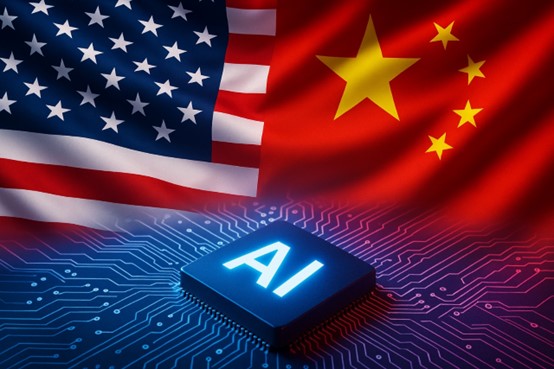
The rivalry between the United States and China over artificial intelligence is entering a sharper phase, with Washington accusing Chinese AI companies of engaging in what it describes as “malicious” efforts to copy advanced American AI technology.
The accusation adds a new dimension to the broader US-China technology conflict, which has increasingly centred on artificial intelligence, semiconductors, advanced computing and access to cutting-edge technology.
Washington has maintained that protecting America’s technological edge in AI is increasingly important not only for economic competitiveness but also for national security.
Chinese technology companies, meanwhile, have rapidly expanded their AI capabilities, producing increasingly sophisticated models and competing with leading US developers on performance, cost and accessibility.
What you should know
The latest dispute reflects a much bigger contest for AI leadership between the world's two largest technology powers.
The US has imposed a series of restrictions aimed at limiting China's access to advanced semiconductor technology and high-performance computing equipment used to develop sophisticated AI systems.
At the same time, Chinese companies have pursued alternative approaches, including developing domestic chips, improving model efficiency and using advanced techniques to achieve more with limited computing resources.
The US allegation that Chinese firms are copying or improperly obtaining American AI technology therefore touches on a critical question: how much of the next generation of AI innovation will be controlled by Washington, Beijing or a broader global ecosystem?
Why it matters
The dispute could have consequences far beyond the US and China.
AI technology is rapidly becoming foundational to industries ranging from financial services and telecommunications to healthcare, defence, manufacturing and media.
A prolonged technology confrontation could accelerate the emergence of separate AI ecosystems, with countries potentially forced to make strategic choices about which technologies, chips, cloud platforms and AI models they use.
For Africa and other emerging markets, the outcome could also shape access to affordable AI infrastructure and determine whether developing economies become technology consumers or build stronger domestic AI capabilities.
The latest accusations underscore that the global AI race is no longer simply about who builds the smartest model. It is increasingly about who controls the chips, data, infrastructure, intellectual property and technological standards that power the AI economy.
The bigger picture
As the US and China compete for dominance in AI, questions surrounding intellectual property, technology transfer, cybersecurity and responsible innovation are likely to become increasingly important.
The emerging AI rivalry could ultimately reshape global technology supply chains and influence the digital strategies of countries far beyond Washington and Beijing.



Comments (0)
No comments yet. Be the first to join the conversation!
Leave a Reply
Your email address will not be published. Required fields are marked *