
Beyond BVAS: Why Nigeria’s Election Technology Must Make Elections Provable - By James Agada
Nigeria’s next election technology challenge is not just faster voting, it is building a system where every electoral outcome can be independently verified, authenticated and proven.
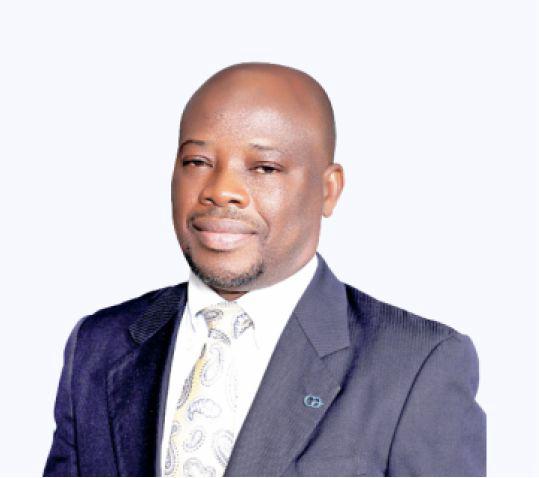
Nigeria must move beyond using technology merely to conduct elections and begin designing electoral systems capable of preserving, connecting and proving what happened at every stage of the electoral process, President of the Institute of Software Practitioners of Nigeria (ISPON), James Agada, has said.
Agada made the case in a lead paper titled “Beyond BVAS — Technology That Makes Elections Provable,” at the Nigeria eGovernment Summit where he argued that the ultimate test of election technology is not simply whether it can process voters, capture votes or transmit results, but whether it can provide credible evidence when an election is challenged.
According to him, an election does not end when the last voter leaves the polling unit. Rather, it ends when the result is either accepted or successfully defended when challenged.
“The real test of electronic election technology is not simply whether it can process a voter, capture a vote or transmit a result,” Agada said. “The real test is whether, when somebody says, ‘That is not what happened,’ the technology can help us establish, with evidence, what actually happened.” From BVAS to an Electoral Evidence System
Agada drew lessons from three major Supreme Court cases — Oyetola v INEC, Atiku and Obi v INEC, and Ombugadu v Alhaji to demonstrate the evidentiary challenges facing election technology.
In Oyetola v INEC, he noted that the connection between voter accreditation and the corresponding vote and result is critical.
The lesson, he argued, is that accreditation records and polling-unit results should not exist as disconnected pieces of information that have to be reconstructed after an election.
“The accreditation event and the vote and result must be capable of being connected,” he said.
The Atiku and Obi v INEC case, he said, raises another fundamental issue: determining which electronic record is authoritative.
While the INEC Result Viewing Portal (IReV) provided an electronic means of viewing polling-unit results, Agada pointed out that the Supreme Court distinguished it from the statutory collation system.
His technological takeaway is that simply creating digital records does not automatically create a reliable chain of truth. “A chain of truth is better than a pile of records,” he argued.
The third case, Ombugadu v Alhaji, according to Agada, highlights the importance of the underlying electronic source when digital evidence becomes central to an electoral dispute.
This raises a critical question for technology designers: are electoral systems preserving the evidence itself, or merely preserving the device that created the evidence?
Authenticity Is Not Enough
Agada said the next generation of election technology must distinguish between authenticity, integrity and correctness.
Authenticity establishes whether a record genuinely came from its claimed source. Integrity asks whether the record has changed since it was created. Correctness, however, addresses the more difficult question of whether the record accurately represents what actually happened.
“A perfectly authentic record can still be wrong,” he said, noting that a genuine device, database or transmission could still contain or communicate an incorrect result.
He therefore called for a shift from viewing BVAS and other electoral technologies primarily as devices to seeing them as components of an electoral evidence system.
Designing Elections for the Courtroom
Agada proposed that every significant electoral event should generate a comprehensive evidence package containing the original record, a reliable timestamp, identification of the device or system that generated it, integrity information, chain of custody, audit trail and mechanisms for independent verification.
Such a system, he argued, would allow investigators, courts and independent experts to reconstruct what happened during an electoral event rather than relying on disconnected screenshots, database reports or individual devices.
He noted that Nigeria's 2026 Electoral Act contains provisions addressing electronic transmission and the National Electronic Register, describing the legislative direction as significant while stressing that legislation alone has not solved the technological challenge.
Conduct. Preserve. Prove.
For Agada, the next phase of Nigeria's electoral technology journey should be built around three principles:
Conduct. Preserve. Prove.
The objective should no longer be limited to asking whether technology can conduct an election.
Instead, election stakeholders should ask whether technology can conduct the election, preserve what happened and prove what happened.
He said electoral technology should be capable of answering the fundamental question that could come from a losing candidate, political party, election tribunal, the Supreme Court, an auditor or an independent expert:
“How do you know?”
Ultimately, Agada said, Nigeria should focus less on simply putting more technology into elections and more on determining the kind of evidence architecture every electoral technology system should be required to produce.
“Technology should not merely conduct elections,” he concluded. “It should make elections provable.”
ISPON President James Agada calls for a new electoral evidence architecture that can connect, preserve and independently verify what happened from voter accreditation to the final result.
About the Author
James Agada is the President of the Institute of Software Practitioners of Nigeria (ISPON) and a leading voice on Nigeria’s software, technology and digital transformation ecosystem. In this paper, he examines how election technology can evolve beyond simply conducting elections to creating a credible, verifiable and court-ready chain of electoral evidence.




Comments (0)
No comments yet. Be the first to join the conversation!
Leave a Reply
Your email address will not be published. Required fields are marked *