
The AI Trust Gap: Why Africa Must Prioritise Responsible AI Before Scale By Roseline Ilori
As AI adoption accelerates across Africa, the continent must build trust, governance and accountability into its AI ecosystem before rapid deployment creates risks that become harder to reverse.

Artificial Intelligence has arrived in Africa and it is moving rapidly from experimentation into everyday life.
Across financial services, healthcare, education, agriculture, entertainment and public administration, AI is changing how Africans work, communicate, learn, create content and make decisions.
The excitement is justified. AI could become one of the most consequential development technologies the continent has encountered.
But there is a question Africa is not asking loudly enough:
Can we scale AI faster than we can build trust in it?
If the answer is yes, one of Africa’s greatest opportunities could also become one of its greatest vulnerabilities.
The AI conversation must therefore move beyond adoption, investment and innovation to a more fundamental issue: trust.
The real AI challenge is not adoption
Much of Africa’s AI conversation centres on catching up. How many people are using AI? How many startups are building AI products? How much investment is entering the sector? How many countries have national AI strategies?
These are important indicators, but they tell only part of the story.
The bigger question is whether the systems being deployed are safe, fair, transparent, accountable and appropriate for the people they serve.
A country can achieve widespread AI adoption and still have a fragile AI ecosystem if citizens do not trust the technology, businesses do not understand the risks, regulators lack the capacity to supervise it, and institutions cannot explain consequential automated decisions.
That is the emerging AI trust gap.
Africa must close that gap before the pursuit of scale becomes difficult to reverse.
Africa has already chosen a direction
Africa is not starting from zero.
The African Union’s Continental Artificial Intelligence Strategy recognises AI as a strategic asset for the continent’s development while advocating an Africa-centric, ethical, responsible and equitable approach.
That is an important distinction.
Africa should not simply become a market for technologies developed elsewhere. The continent must build its own capacity, strengthen research and skills, develop appropriate governance frameworks and ensure that AI reflects African priorities and realities.
The principle is straightforward:
Africa does not have to choose between AI innovation and responsible AI. We need both.
Trust is digital infrastructure
When we talk about digital infrastructure, we usually think of broadband, fibre, data centres, cloud computing, electricity and smartphones.
All are essential.
But AI is exposing another form of infrastructure that is just as important: digital trust.
People must trust organisations collecting and processing their data. Businesses must trust systems making recommendations or automating processes. Citizens must trust digital public services. Patients must trust AI-assisted healthcare. Customers must trust financial institutions using algorithms to assess risk.
Without trust, adoption becomes fragile.
Consider an AI system used by a financial institution to determine who receives credit. If it consistently disadvantages certain groups, who is accountable?
If a citizen is denied a government service because an automated system incorrectly classified them, where can they appeal?
If an AI recruitment platform systematically filters out qualified candidates, who identifies the problem?
These are no longer hypothetical technology questions. They are questions of governance, business, ethics and human rights.
Responsible AI is not anti-innovation
There is a persistent misconception that responsible AI means excessive regulation.
It does not.
Responsible AI is not about preventing innovation. It is about making innovation sustainable.
Poorly governed AI can create enormous costs through discrimination, privacy violations, cybersecurity vulnerabilities, misinformation, reputational damage and loss of public confidence.
Good governance, by contrast, can create the confidence innovators need to deploy and scale.
The objective should therefore not be to regulate AI out of existence.
It should be to create an environment in which responsible innovation can flourish.
The data question
There can be no serious conversation about responsible AI without addressing data.
AI systems depend heavily on data, and Africa generates enormous volumes of it through telecommunications, banking, healthcare, education, government services, commerce and everyday digital activity.
That data represents both an opportunity and a responsibility.
Who controls it? Who has access to it? How is consent obtained? How is it stored and shared? Can individuals understand how their information is being used?
These questions become increasingly important as African data-protection frameworks and institutional capacities evolve.
Privacy cannot be something organisations address after deploying a technology.
Privacy must be designed into the AI lifecycle from the beginning.
The rise of shadow AI
Another emerging challenge is shadow AI the use of AI tools by employees without formal organisational approval, governance or oversight.
Employees are already using generative AI to write reports, analyse information, summarise documents, prepare presentations, draft communications and perform professional tasks.
Much of this is productive.
The risk emerges when confidential business information, customer data, proprietary documents or sensitive personal information are entered into AI systems without adequate safeguards.
This is why AI governance cannot remain the responsibility of technology departments alone.
Boards need to understand it. CEOs need to understand it. Legal, compliance and human-resource teams need to understand it. Employees need clear policies, practical guidance and training.
The question is no longer whether organisations will use AI.
It is whether they will use it deliberately or accidentally.
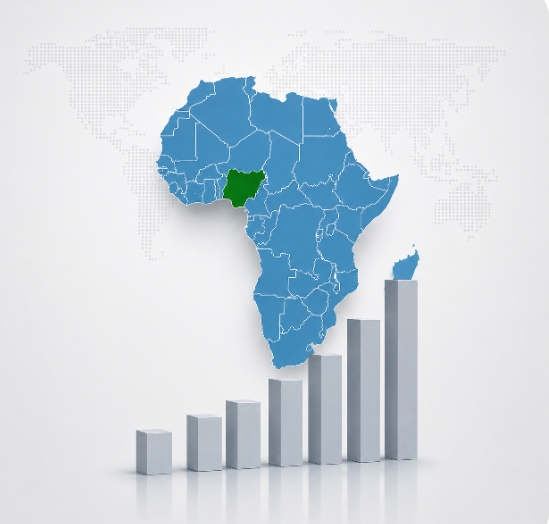
Nigeria must lead
Nigeria has a unique opportunity to shape Africa’s AI future.
As one of the continent’s largest economies and most influential technology markets, Nigeria’s approach to AI will have implications well beyond its borders.
The country has enormous talent, a vibrant startup ecosystem, a large young population and technology companies operating at continental scale.
But technological enthusiasm must be matched by institutional preparedness.
Nigeria cannot afford to become merely a large consumer market for imported AI technologies.
We must build.
We must research.
We must develop local datasets.
We must support indigenous AI companies.
We must invest in computing infrastructure.
We must train specialists.
And we must build the governance capacity required to supervise increasingly powerful AI systems.
Skills are essential, but skills without governance will not be enough.
Africa must build, not merely consume
There is a larger issue at stake: technological sovereignty.
Africa needs African companies building AI solutions, African universities conducting research, African policymakers shaping global AI conversations and African experts capable of auditing AI systems.
We also need responsible investment in African datasets, local-language technologies and indigenous AI talent.
Our languages and cultures matter.
An AI system can be technically impressive while remaining culturally inadequate if its training data does not sufficiently represent African realities.
We should not simply ask whether AI understands Africa.
We should be building AI capable of understanding Africa.
From AI-first to trust-first
Africa should not approach AI with fear. The opportunity is too significant.
AI can improve healthcare, transform agriculture, expand financial inclusion, strengthen education, create new businesses and accelerate scientific research.
But opportunity without governance can become risk.
Scale without trust can become instability.
Innovation without accountability can become exploitation.
Africa’s AI strategy should therefore be guided by a simple principle:
Trust before scale.
Not trust instead of scale.
Not regulation instead of innovation.
But trust as the foundation for sustainable scale.
Governments must turn strategies into action. Businesses must move from experimentation to responsible deployment. Universities must invest in research and African talent. Regulators must build technical capacity. Technology companies must embed safety, privacy and accountability into their products.
And citizens must be equipped to understand both the possibilities and limitations of AI.
The AI race has already begun.
But Africa should not be obsessed with simply catching up. We should be asking a more important question:
What kind of AI ecosystem do we want to build?
One that extracts data without accountability?
One that automates consequential decisions without explanation?
Or one that combines innovation with human dignity, inclusion, security, privacy and accountability?
The choice is ours.
The question before Africa is therefore not simply how fast can we scale AI?
It is:
How responsibly can we scale it—and can we build enough trust to make that scale sustainable?
The answer will shape not only Africa’s AI future, but the future of Africa itself.
About the Author
Roseline Ilori is a Pan-African technology and compliance leader with over two decades of experience in digital transformation across Africa. She is Founder & CEO of Bridge57 Solutions Limited, focused on AI governance, data privacy, cybersecurity and responsible technology adoption.
A former CEO of MTech Communications Plc, she is also Co-Founder and Trustee of Women in Data Privacy and Deputy Chairperson of the ICT Sectorial Group, Lagos Chamber of Commerce and Industry (LCCI).


Comments (0)
No comments yet. Be the first to join the conversation!
Leave a Reply
Your email address will not be published. Required fields are marked *