
Osinbajo Proposes 10-Year AI Plan to Transform Ogun Community into African Tech Hub
Former Vice-President Yemi Osinbajo unveils the proposed Ikenne 2036 Plan, advocating AI education, robotics training and technology-driven innovation to position the Ogun community as a centre of technological development in Africa.
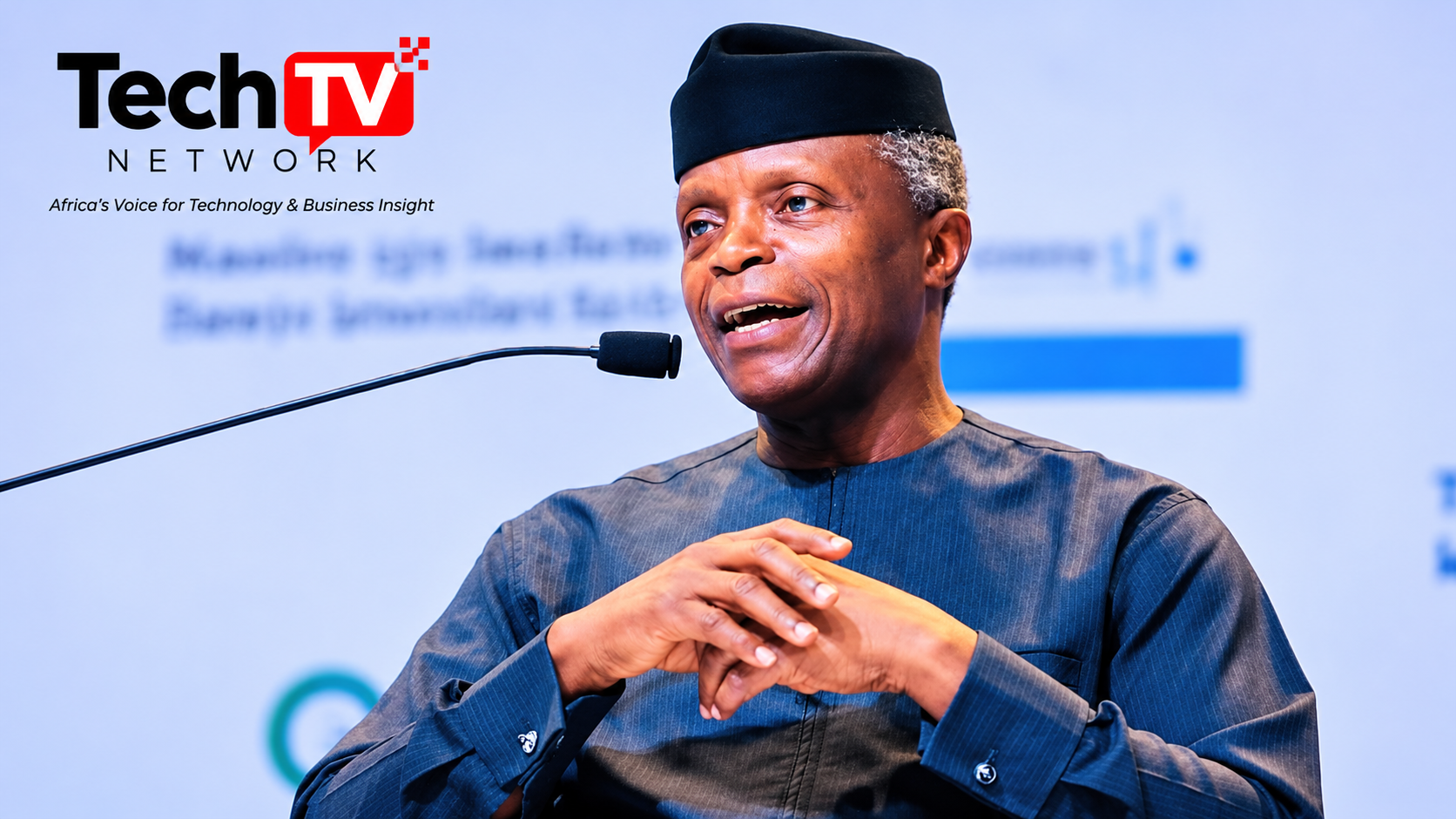
Former Vice-President Yemi Osinbajo has proposed a 10-year artificial intelligence development blueprint to transform Ikenne, Ogun State, into a centre for technological innovation and advanced skills development in Africa.
The proposed initiative, tagged the Ikenne 2036 Plan, aims to build on the educational legacy of the late Chief Obafemi Awolowo by equipping young people with skills in artificial intelligence, robotics and other emerging technologies.
Osinbajo presented the proposal on Friday while delivering a lecture titled “Ikenne, a Small Town, a Great Inheritance and an Even Greater Future” at the 50th Ereke Day anniversary organised by the Ikenne Development Association.
He argued that the size of a community should not limit its ambitions, pointing to Awolowo’s investments in education and the establishment of Western Nigeria Television in 1959 as examples of how visionary leadership can drive development through human capital and technology.
According to Osinbajo, the next 50 years will be significantly shaped by artificial intelligence, creating opportunities for communities that invest early in education, innovation and technological capabilities.
He challenged Ikenne to aspire to become a hub for developing highly skilled talent and creating AI solutions capable of addressing challenges across Africa.
AI Education and Robotics at the Core
Under the proposed plan, Osinbajo recommended integrating science, technology, engineering, arts and mathematics (STEAM) education into the learning system, with AI literacy introduced from primary school.
He also called for robotics training, AI-powered learning tools and well-equipped laboratories to prepare students for an increasingly technology-driven economy.
The former Vice-President stressed the importance of retraining teachers to facilitate AI-assisted learning and robotics education. He also proposed partnerships with Chinese schools that have developed strong AI curricula.
Beyond classroom education, he advocated establishing a dedicated campus for artificial intelligence and advanced systems, with the capacity to develop solutions for sectors including agriculture, healthcare, education and finance.
Osinbajo cited examples of young people who had acquired technology and robotics skills through targeted learning opportunities, arguing that access to appropriate training and support could unlock talent and expand future economic opportunities.
Implementation and Measurable Targets
Osinbajo said the Ikenne 2036 Plan should be built around clearly defined priorities, assigned responsibilities, implementation costs and measurable annual targets.
He also emphasised the need for monitoring mechanisms to track progress and ensure that the proposed blueprint translates into tangible development outcomes.
He urged the community to look beyond physical infrastructure and invest in knowledge, innovation and human capital as foundations for long-term prosperity.
The proposal draws inspiration from Awolowo’s education policies and the philosophy of the late educationist Tai Solarin, founder of Mayflower School in Ikenne, whose approach emphasised independent thinking, character development and practical skills.
The event also featured awards recognising individuals for their contributions to community development in Ikenne, Ogun State and Nigeria.
Why It Matters
The proposed Ikenne 2036 Plan highlights the growing importance of grassroots participation in Nigeria’s artificial intelligence and digital transformation agenda.
If implemented, its focus on early AI education, robotics, teacher training and locally developed technology solutions could help prepare young people for emerging opportunities in the digital economy.
However, achieving the proposed ambition will require sustained investment, effective partnerships, access to digital infrastructure and electricity, and a clear framework for measuring results over the 10-year period.
For Nigeria’s wider technology ecosystem, the proposal reinforces the importance of developing AI talent beyond major urban centres and creating opportunities for communities to participate in the next phase of technological innovation.


Comments (0)
No comments yet. Be the first to join the conversation!
Leave a Reply
Your email address will not be published. Required fields are marked *