
Nigeria’s Banking Sector Strengthens Position in Africa Top 100 Rankings
Nigeria’s banking sector is strengthening its position on the African financial landscape, with several Nigerian lenders recording significant gains in the 2026 Africa Top 100 Banks ranking following the industry’s recapitalisation drive.
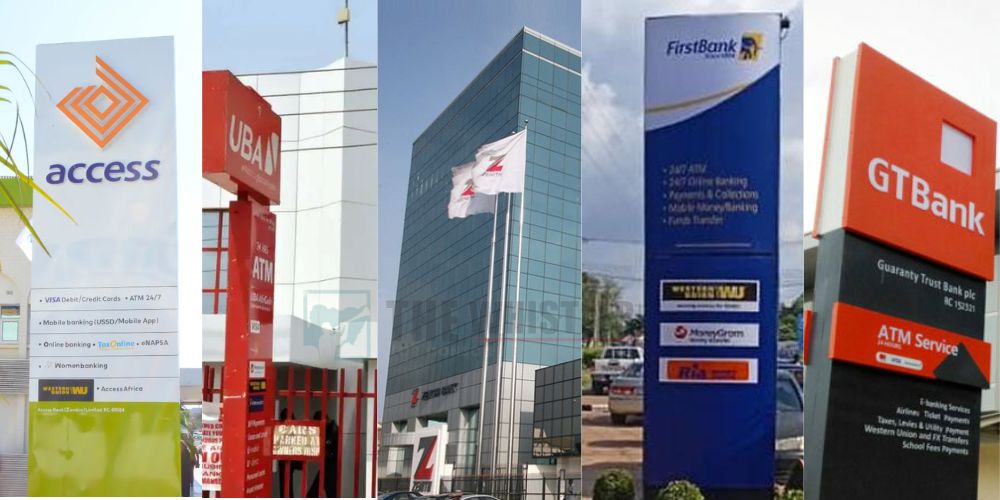
The latest ranking, published by African Business, shows that the combined Tier 1 capital of Nigerian banks in the Top 100 jumped 48 percent to $15.2 billion, up from $10.3 billion in the previous ranking.
The increase was driven in part by the Central Bank of Nigeria’s recapitalisation programme, which pushed lenders to strengthen their capital bases through rights issues, public offerings and other fundraising channels.
The stronger capital position has translated into notable movements for some of Nigeria’s biggest banks.
United Bank for Africa (UBA) recorded one of the biggest gains, climbing five places to 15th, after its Tier 1 capital rose from $1.7 billion to $2.7 billion. UBA consequently moved ahead of Access Bank in the continental ranking.
Access Bank moved from 14th to 17th, despite increasing its Tier 1 capital from $2 billion to $2.6 billion.
Its lower ranking therefore reflects the faster growth of competing banks rather than a decline in its capital base.
GTBank also climbed five places to 25th, with Tier 1 capital increasing from $1.1 billion to $1.77 billion.
One of the biggest Nigerian movers was Stanbic IBTC, which jumped an impressive 35 places, from 80th to 45th, after its Tier 1 capital more than doubled from $290 million to $735 million.
Zenith Bank, meanwhile, slipped four places to 20th despite adding about $600 million to its capital, highlighting how rapidly the competitive landscape is changing as banks across the continent strengthen their balance sheets.
The broader picture is equally significant. Combined Tier 1 capital among Africa’s Top 100 banks increased 23 percent to $155 billion, up from $126.1 billion, while total assets rose 16 percent to $1.8 trillion.
The Banker says the continent’s banking growth has been supported by a weaker US dollar and recapitalisation efforts, particularly in Nigeria and Ghana.
For Nigeria, the latest figures mark a significant recovery after years in which naira depreciation reduced the dollar value of local banks’ capital and balance sheets.
The country’s recapitalisation exercise, which concluded in March 2026, saw Nigerian banks raise more than N4.65 trillion in fresh capital to meet the CBN’s revised minimum capital requirements.
However, Nigeria still has ground to cover. Its banks’ combined $15.2 billion in Tier 1 capital remains below the $70.5 billion held by North African banks and the $47.8 billion held by Southern African banks in the Top 100.
The significance of the latest ranking extends beyond league-table positions. Stronger capital gives Nigerian banks greater capacity to finance businesses, infrastructure, trade and cross-border expansion as Africa moves towards deeper economic integration.
The next test will be whether the stronger capital base can translate into sustainable lending, greater regional expansion and stronger participation in Africa’s growing trade and investment economy.
For Nigeria’s banking industry, the message from the 2026 ranking is clear: recapitalisation is beginning to translate into greater continental financial weight.




Comments (0)
No comments yet. Be the first to join the conversation!
Leave a Reply
Your email address will not be published. Required fields are marked *