
Nigeria Could Double Energy Investment in Five Years, Says IEA Chief
Fatih Birol says Nigeria’s new relationship with the International Energy Agency could unlock fresh capital across oil, gas and renewable energy as global markets increasingly prioritise reliable energy partners.
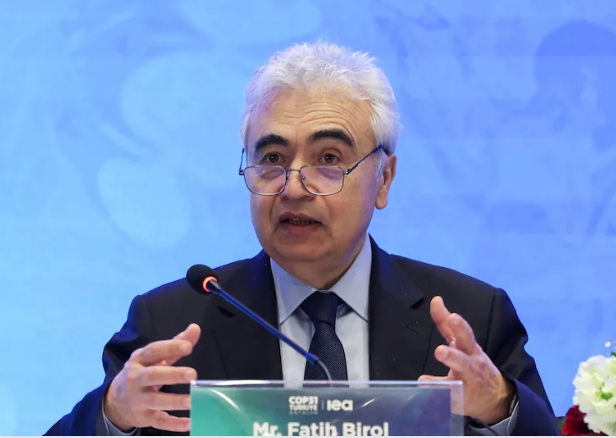
Nigeria could double investment in its energy sector within the next five years, according to International Energy Agency (IEA) Executive Director Fatih Birol.
Birol made the projection during a visit to Abuja, saying Nigeria’s new status as an associate member of the IEA could help attract greater investment, deepen technical cooperation and strengthen the country’s voice in global energy policy.
“My goal is, in a very short period of time, in five years, at least doubling the energy investments Nigeria is receiving today,” Birol said.
The IEA chief said Nigeria’s considerable oil, gas and renewable-energy resources, particularly its solar potential, could position the country to attract both government and private capital.
His comments come as global energy markets undergo major shifts, with geopolitical disruptions pushing countries to place greater emphasis on energy security, supply reliability and trusted partnerships.
Birol argued that trust is increasingly becoming a critical factor in global energy investment, saying countries are looking for partners they can rely on.
A new opportunity for Nigeria
Nigeria has been seeking to reverse years of underinvestment in its energy industry while increasing oil and gas production and expanding renewable-energy capacity.
The country is targeting crude oil production of about 3 million barrels per day by 2030, although achieving that ambition will require sustained investment, improved infrastructure, stronger security and continued efforts to tackle oil theft.
The IEA partnership could therefore provide Nigeria with access to technical expertise, international networks, policy support and energy data that could strengthen the investment environment.
The opportunity also extends beyond crude oil. Nigeria's energy transition will require substantial capital for gas infrastructure, electricity generation and grids, solar projects, storage, energy efficiency and electrification.
The IEA estimates that global energy investment is set to reach a record $3.4 trillion in 2026, with about $2.2 trillion directed towards clean-energy technologies and infrastructure, including renewables, grids, storage and electrification.
What this means for Nigeria
If the projected doubling materialises, it could represent a significant boost to Nigeria's economic and technological development.
More energy investment could mean:
1. More reliable electricity for homes and businesses.
2. Greater industrial capacity, particularly for energy-intensive industries.
3. Expansion of gas and renewable-energy infrastructure.
4. More foreign and domestic capital flowing into energy projects.
5. New jobs and technical skills across the energy value chain.
6. Greater potential for Nigeria to become a more important regional energy hub.
But the projection is not a guarantee. Nigeria will still need to demonstrate that investments can be made safely, profitably and predictably.
Why it matters
For Nigeria, the bigger story may be investor confidence.
The IEA's endorsement comes at a time when global energy markets are increasingly focused not simply on who has resources, but on who can reliably produce, process and deliver energy.
Nigeria has the resources. The challenge is converting those resources into dependable energy supply, infrastructure and economic value.
If the country can sustain reforms, improve security, strengthen regulation and provide greater certainty for investors, the IEA's five-year projection could become more than an optimistic forecast it could signal the beginning of a new investment cycle for Nigeria's energy economy.
Nigeria Could Double Energy Investment in Five Years Says IEA Chief.



Comments (0)
No comments yet. Be the first to join the conversation!
Leave a Reply
Your email address will not be published. Required fields are marked *