
Botswana High Commissioner Backs Africa’s Push for a Stronger Voice in Global Information Order
Dr. Mkpe Abang is set to launch Weapons of Mass Manipulation: State Media, Global Influence and the New Diplomacy of Power, a book examining the role of state media, global influence and information in shaping international relations.
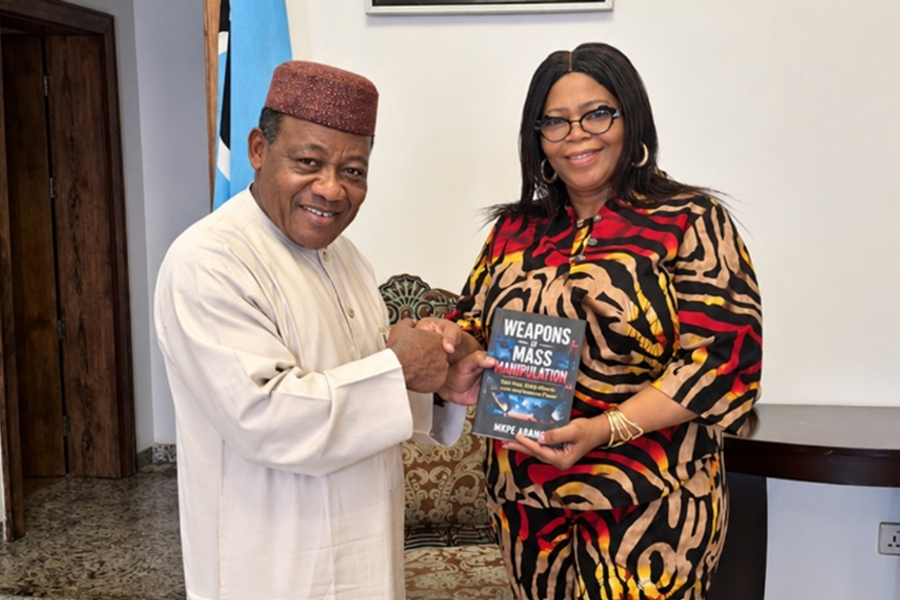
Botswana’s High Commissioner to Nigeria, Philda Nani Kereng, has called for stronger African control over international narratives, emphasising the strategic role of credible state media in advancing national interests and strengthening diplomatic influence.
Kereng made the remarks during a diplomatic meeting with Dr. Mkpe Abang, founder and chief executive of Media Diplomacy Studies (MDS), ahead of the presentation of his forthcoming book, Weapons of Mass Manipulation: State Media, Global Influence and the New Diplomacy of Power.
The meeting focused on Africa’s position in the evolving global information order and how media institutions can shape international perceptions, communicate national priorities and support diplomatic engagement.
According to Abang, the High Commissioner stressed the need for African countries to take greater responsibility for communicating their histories, achievements, realities and aspirations to international audiences.
The discussions also examined concerns that external representations of African countries can sometimes present incomplete or distorted accounts of the continent, influencing how its people, institutions and economies are perceived globally.
Kereng highlighted the importance of deliberate public policies, sustained institutional investment and technological capacity-building to strengthen African state media organisations.
She noted that national media institutions need professional expertise, modern technological infrastructure and strategic communication capabilities to present African perspectives credibly and respond effectively to misleading narratives.
Botswana High Commission Confirms Participation
During the meeting, Abang presented Kereng with an advance, personally autographed copy of his book.
The High Commissioner confirmed that the Botswana High Commission in Nigeria would participate in the book presentation and the inauguration of Annual Diplomacy Day.
She also indicated her intention to bring the publication to the attention of Botswana’s President, Advocate Duma Gideon Boko, citing its relevance to discussions about Africa’s role in shaping international narratives.
The engagement underscores the growing importance of media diplomacy in international relations, particularly as digital platforms, information networks and communication technologies influence how countries project their identities and interests.
State Media and the Changing Dynamics of Diplomacy
Abang’s book explores the relationship between state media, global influence and the changing dynamics of diplomatic power.
It argues that state media institutions, when supported by credibility, professional competence and a clear strategic purpose, can contribute to national identity-building and international engagement.
However, the broader debate over Africa’s global representation also raises questions about media independence, public trust, transparency and the need for reliable information.
For African countries seeking greater influence in international affairs, strengthening communication capacity must go hand in hand with professional standards and public credibility.
As digital technologies accelerate the circulation of information, governments and media institutions face increasing pressure to communicate effectively while maintaining the trust of domestic and international audiences.
Book Presentation and Annual Diplomacy Day Set for November 20
The presentation of Weapons of Mass Manipulation and the inauguration of Annual Diplomacy Day are scheduled for Friday, November 20, 2026, at 10:00 a.m. at the Shehu Musa Yar’Adua Centre in Abuja, under the auspices of Media Diplomacy Studies.
The event is expected to provide a platform for discussions on the intersection of media, diplomacy, technology and international influence.
For Africa, the challenge extends beyond economic growth and technological advancement to ensuring that the continent's experiences, achievements and perspectives are communicated accurately and effectively to global audiences.
The forthcoming engagement will place renewed attention on how credible media institutions and sustained diplomatic collaboration can help African countries participate more actively in shaping the narratives that influence their standing in the international community.
As Abang argues, Africa must move beyond being predominantly the subject of narratives produced elsewhere and become a more authoritative participant in determining how it is understood around the world.
WHY IT MATTERS
Information is increasingly a strategic asset in global affairs. How countries are represented internationally can influence perceptions of their political institutions, investment opportunities, cultural identity and diplomatic priorities.
For Africa, building stronger media institutions and investing in digital communication capabilities could help broaden international understanding of the continent. But lasting influence will also depend on accuracy, transparency, professionalism and public trust.
The conversation surrounding Weapons of Mass Manipulation highlights a central question for African policymakers and media leaders: how can the continent strengthen its global voice while ensuring that the information it communicates remains credible?


Comments (0)
No comments yet. Be the first to join the conversation!
Leave a Reply
Your email address will not be published. Required fields are marked *